HYDAC Gear Pump Selection: PGE External Gear vs PGI Internal Gear Pumps
HYDAC PGE uses external gears and PGI uses an internal gear arrangement. Both are fixed-displacement pumps. At the same speed, a larger displacement gives greater theoretical delivery.
The following uses PGE102 and the high-pressure PGI102 series to explain selection for a 20 L/min power unit, a 60 L/min supply circuit and continuous high-pressure operation.
PGE102 and PGI102
PGE has two meshing external gears, carrying oil around their outside from inlet to outlet. PGI combines an external gear with an internally toothed ring; changing tooth-space volumes draw in and discharge oil. Displacement determines theoretical delivery per revolution.
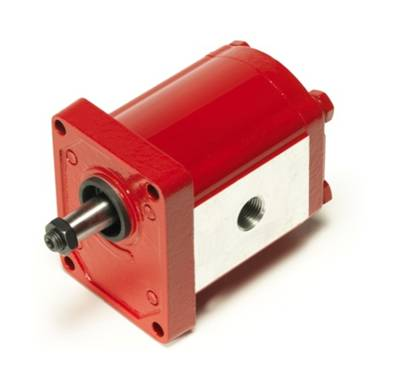
PGE102 is the size 2 external gear series, with listed displacements of 4.5–28 cm³/rev and speeds up to 3500 r/min.
PGI102 is a high-pressure internal gear series covering several sizes. Its listed displacement range is 3.8–250 cm³/rev, nominal pressure up to 330 bar, maximum pressure up to 350 bar and speed up to 4000 r/min.
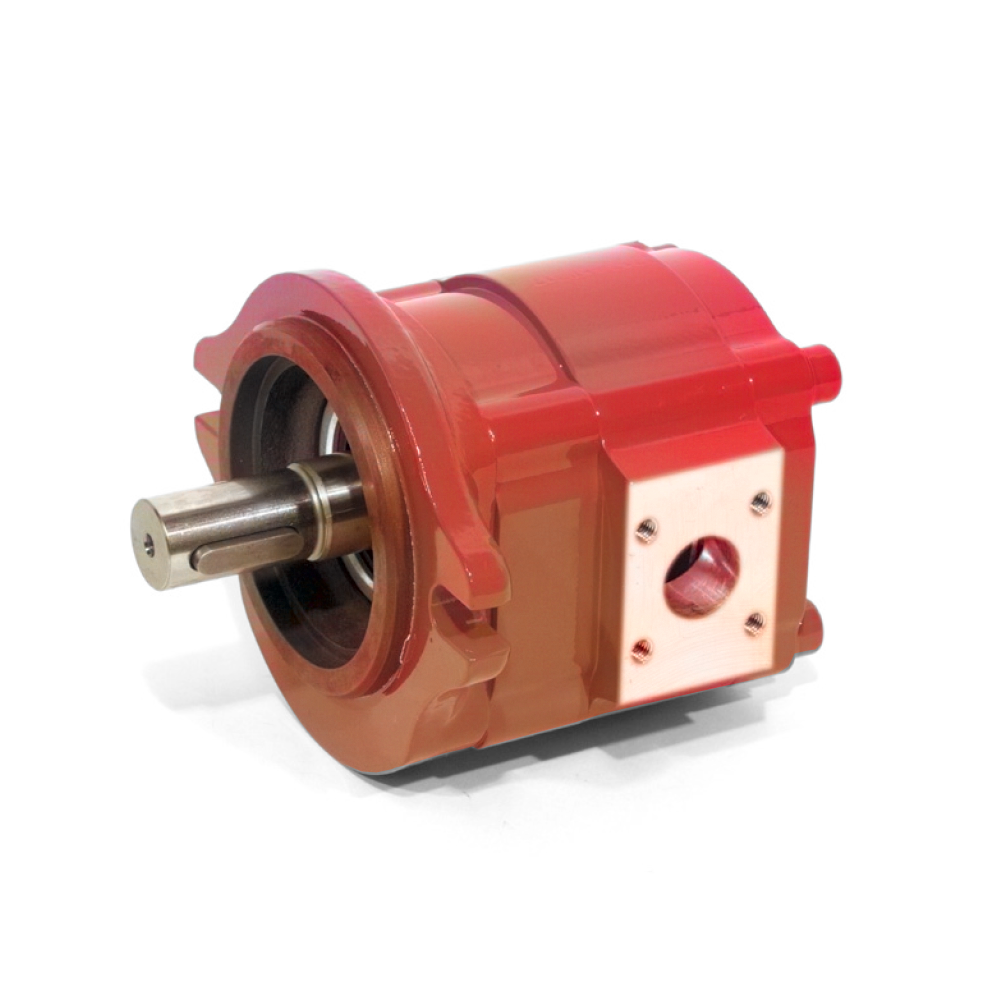
These are series-wide ranges. They do not describe a single pump operating at 250 cm³/rev, 330 bar and 4000 r/min simultaneously.
Can PGE102 supply a 20 L/min power unit?
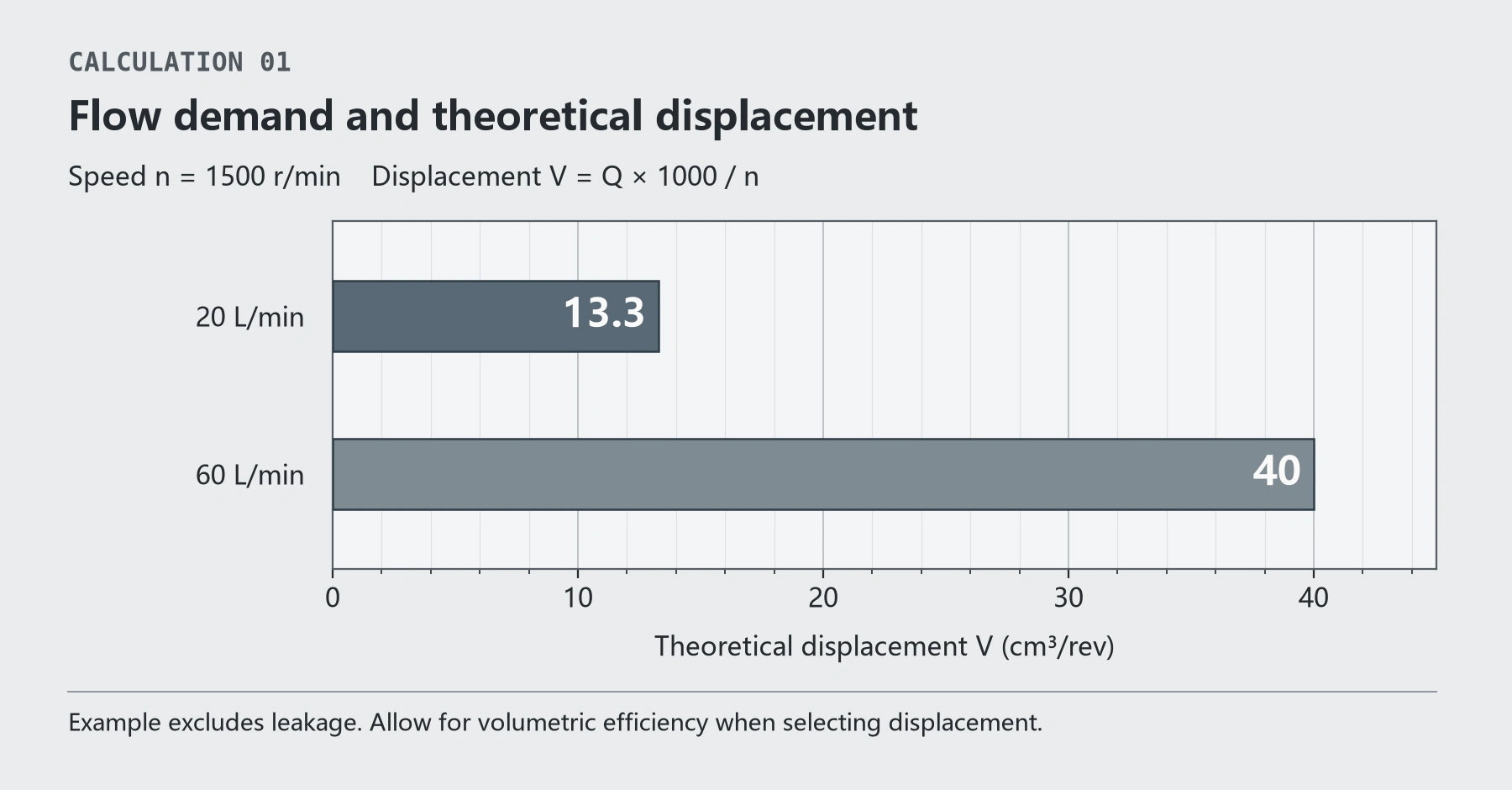
Assume a small hydraulic power unit needs 20 L/min at 1500 r/min. Required theoretical displacement is:
Displacement = 20 × 1000 / 1500 ≈ 13.3 cm³/rev
Using an assumed volumetric efficiency of 90% gives:
Displacement = 20 × 1000 / (1500 × 0.9) ≈ 14.8 cm³/rev
Both values fall within the PGE102 range of 4.5–28 cm³/rev. The difference is that 13.3 cm³/rev ignores leakage. At the assumed efficiency it delivers approximately 18 L/min, below the required 20 L/min.
PGE102 is too small for 60 L/min at 1500 r/min
A supply of 60 L/min at 1500 r/min requires 40 cm³/rev theoretically. The largest PGE102 displacement is 28 cm³/rev, giving only 42 L/min at this speed even before leakage. It cannot deliver 60 L/min.
At an assumed volumetric efficiency of 90%, required displacement is approximately 44.4 cm³/rev. This falls within the PGI102 series range and may also be covered by a larger external gear pump. PGE102 being too small does not rule out every PGE size.
Continuous high pressure differs from a short pressure peak
One machine reaches high pressure briefly during each cycle; another runs under pressure continuously. Their continuous-duty requirements differ. The PGI102 series maximum nominal pressure of 330 bar and maximum pressure of 350 bar do not mean every displacement can operate continuously at 350 bar.
For example, if a machine requires a continuous 350 bar, the series maximum pressure of 350 bar does not establish suitability. Maximum and continuous pressures are different ratings, and the highest nominal rating of 330 bar is below this continuous requirement.
| Target flow at 1500 r/min | Theoretical displacement | Displacement at assumed 90% volumetric efficiency | Within PGE102 displacement range? |
|---|---|---|---|
| 20 L/min | 13.3 cm³/rev | 14.8 cm³/rev | Yes |
| 60 L/min | 40 cm³/rev | 44.4 cm³/rev | No |
Why a 16 cm³/rev pump may not deliver 24 L/min
Displacement multiplied by speed and divided by 1000 gives theoretical flow in L/min. At 16 cm³/rev and 1500 r/min, theoretical flow is 24 L/min.
An assumed volumetric efficiency of 90% gives an estimated delivered flow of 21.6 L/min. The 90% value is a calculation assumption, not measured PGE or PGI performance.
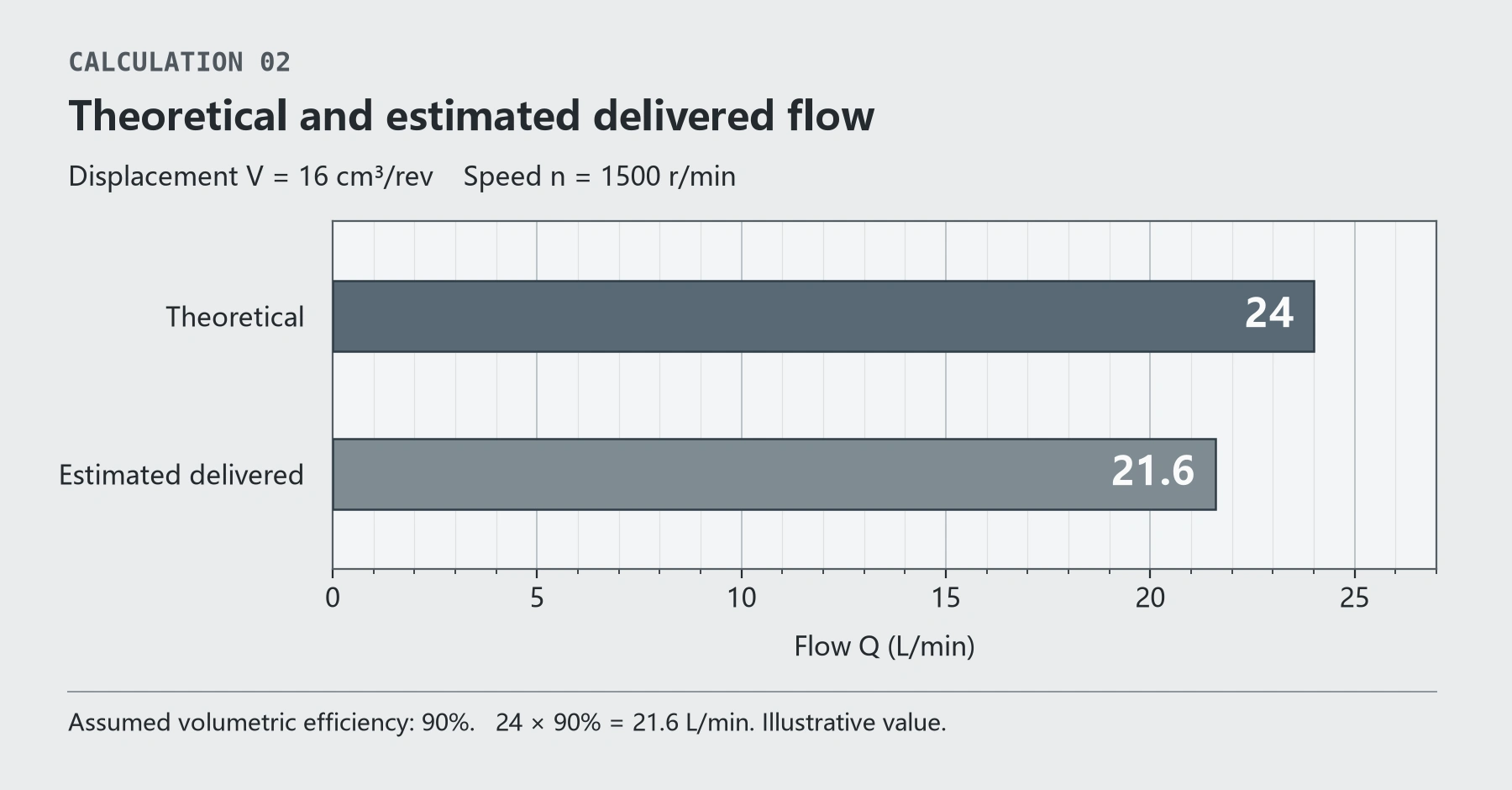
If the equipment needs 24 L/min, this example falls short by 2.4 L/min, approximately 10%. With other conditions unchanged, the same cylinder also moves correspondingly slower.
At an assumed inlet-to-outlet pressure difference of 200 bar and flow of 21.6 L/min, hydraulic output power is:
P = 200 × 21.6 / 600 = 7.2 kW
If pump total efficiency is further assumed to be 80%, required shaft power is approximately 9 kW. A hydraulic output of 7.2 kW therefore does not justify a 7.2 kW motor. Pressure and efficiency here are calculation assumptions.
Will an internal gear pump fix cold-start noise?
Noise that is pronounced during a cold start and decreases after warming can arise from high viscosity, excessive inlet resistance or air ingress. Replacing an external gear pump with an internal gear pump without addressing those causes can leave the noise unchanged.
For example, a narrow suction hose and numerous fittings increase resistance with cold oil, impairing pump filling. Low oil level and leaking suction fittings can also disrupt filling. Compare cold and warm operation at the same speed and movement so changing duty is not mistaken for a difference in pump design.
PGE102 has a normal operating viscosity range of 16–200 mm²/s.
What can go wrong when replacing an existing pump?
Rotation markings must be read with their viewing direction. Looking from the shaft end rather than the rear reverses the apparent direction. Incorrect rotation can prevent normal suction and delivery and damage the pump.
Shaft type, diameter and flange locating dimensions determine whether the pump connects to the original coupling and motor mount. Different port threads also prevent direct reconnection of the original piping.
For a multiple pump, calculate the combined power when sections are pressurized simultaneously. If one section delivers 20 L/min at 100 bar and another 10 L/min at 150 bar, combined hydraulic output is approximately 5.83 kW before losses. Selecting the motor from only one section underestimates drive load.
Choosing between PGE and PGI
At 20 L/min and 1500 r/min, theoretical displacement is approximately 13.3 cm³/rev, within the PGE102 displacement range. At 60 L/min and the same speed, theoretical displacement reaches 40 cm³/rev, beyond PGE102, requiring a larger size.
For continuous high-pressure operation, the continuous rating must cover the machine requirement. A 350 bar maximum cannot be treated as a 350 bar continuous rating. Pump type, displacement and pressure must all be suitable; satisfying just one does not establish suitability.